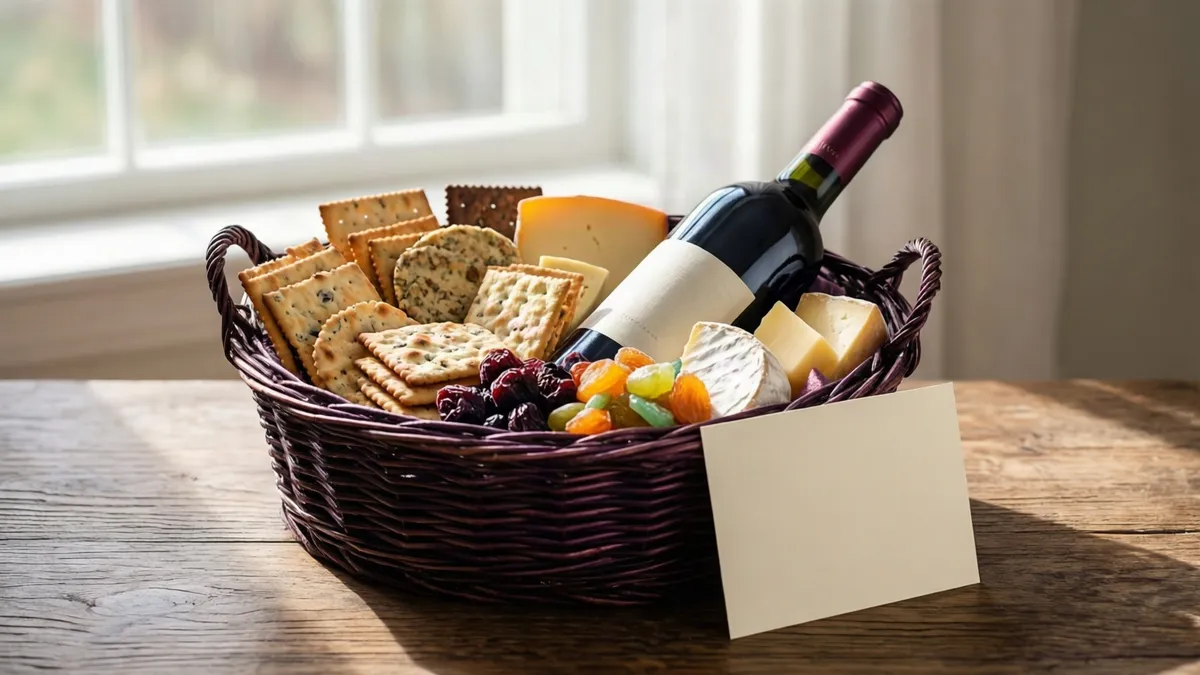
In short: If a couple has everything, the gift that respects their space and their taste is one they can use up. This list skips objects entirely and focuses on consumables — food, drink, experiences, and subscriptions — that create a moment without adding clutter. Every pick serves the two of them, with logistics like dietary limits and booking windows stated upfront.
We write buying guides, not product reviews: nothing here has been tested by us in anybody's home. Specs come from the manufacturer or listing, and whatever Amazon shows when you click is the authoritative figure.
This article contains affiliate links. If you buy through one, we earn a small commission at no extra cost to you. We only recommend what we would suggest to a friend.
The Federal Trade Commission's endorsement guides, 16 CFR Part 255, require a disclosure like that one to be difficult to miss, so it sits above every link here. Our full affiliate disclosure has the rest.
A couple who has everything is the hardest pair to shop for. They have the kitchen, the tools, the decor. What they lack is room. The only gift that cannot be duplicated, stored, or returned is one they consume. Gifts for Couples That Work for Two Different People starts from the same problem and arrives at the same answer.
Why consumables beat objects for the couple who has everything
No shelf to spare. Every object you give them has to find a home in a house that is already full. A consumable skips that problem entirely: it enters, gets used, and leaves.
The U.S. Bureau of Labor Statistics reported in 2025 that average annual expenditures were $78,535 per consumer unit in 2024. That figure covers food, housing, transportation, and the rest of a household's spending. A household spending at that pace already owns the durable goods it needs. What it buys week after week is food, drink, and experiences — the things that disappear and need replacing.
That is the opening. A bottle, a basket, a class, a subscription: each lands in a category the couple already spends in, which means it gets used. An object lands in a category they have stopped spending in, which means it sits. Useful Gifts for Couples: The Household-Gift Test applies the same logic to objects that earn their keep.
If it needs a shelf, skip it. If it gets used by next month, buy it.
Food and drink for couples who have everything
Food and drink are the easiest consumables to get right. No scheduling, no booking window, no shared calendar. The couple opens the box, sets it out, and finishes it over a weekend.
A gourmet basket works for the two of them if it has range — sweet, salty, savory, something each will reach for. A bottle of wine or spirits works if you know they drink, and it disappears in one evening. Coffee works for one of them or both, depending on who the drinker is.
The National Retail Federation's 2026 Valentine's Day survey expected consumer spending to reach a record $29.1 billion. Candy and flowers — both consumables — sit near the top of what people buy for that occasion. The pattern confirms the instinct: when people buy for a pair, they default to things that get consumed.
Shelf-stable food lasts weeks to months. That is the point. It is not permanent. A gourmet snack basket gives them something to open together. Engagement Gifts for Couples That Do Not Jump Ahead covers the timing of when a food gift suits the occasion.
Experiences with the logistics stated first
An experience is a logistics gift. It has a booking window, an expiry date, a distance, and a requirement that both people be free on the same day. State those before you buy.
A cooking class works for the two of them if it is local and runs on a weekend. A wine tasting works if they can drive there. A theater ticket works if you know their schedule, and you usually do not.
A 2023 study in Frontiers in Psychology found that experiential gifts are construed as more autonomy supportive and lead to greater gratitude, especially when given out of love. The study frames why experiences land: they give the couple a choice about when and how to use the gift, rather than dropping an object into their space.
The NRF's 2025 survey reported Valentine's Day spending reached a record $27.5 billion, with evening-out experiences among the top categories. The trajectory is steep. The NRF's 2022 survey reported Americans planned to spend $23.9 billion on Valentine's Day, and the 2023 survey found consumers planned to increase spending to nearly $26 billion. People already reach for experiences when the recipient is a pair.
The risk is the calendar. If the class is 90 minutes away and runs on a Tuesday, the gift is a chore. Check the booking window, the expiry, and whether both can attend before you pay.
Subscriptions that keep giving until they cancel
A subscription is a consumable on a timer. It arrives, gets used, and the next one comes — until the couple cancels. That flexibility is the gift.
Coffee subscriptions work for one of them or both, depending on who drinks it. Meal kits work for the two of them: they cook together, eat together, and the box empties by week's end. Flower subscriptions work for the room they share, and each bouquet lasts about two weeks before it is gone.
The the same study found consumers planned to increase Valentine's Day spending to nearly $26 billion. Recurring gifts have grown as a share of that spending over the past decade. The pattern fits. People give subscriptions when they want a gift that keeps arriving without taking up permanent space.
One caution. A subscription that auto-renews and charges the couple's card after your gift period ends is not a gift; it is a bill. Look for plans that let you prepay a fixed number of deliveries. A monthly coffee subscription or a meal kit gift card lets them control the pace.
Dietary restrictions and the food gift problem
Dietary restrictions are the main reason a food gift fails. A basket of cheese and cured meats is useless to a vegan household. A box of truffles is a non-starter if one of them is allergic to nuts.
You do not always know. If you are not close enough to ask, pick a consumable that sidesteps the question. Wine and spirits avoid the allergy problem entirely, assuming they drink. A fruit delivery covers most dietary lanes. A restaurant gift card lets them choose what fits.
The most common food gift is candy, and candy is also the most likely to hit a dietary wall — nuts, dairy, gluten, soy. Cross-contamination in gift assortments is common enough that an allergy-conscious household will often skip the whole box. The safer route is a consumable that is not food at all: flowers, an experience, or a gift card.
The comparison: consumables by price and shelf life
Price bands below are ours, not a sourced figure. The "How Long It Lasts" column is the point of the table: every gift here disappears.
| Gift | Price Band | What It Is | How Long It Lasts | Best For |
|---|---|---|---|---|
| Gourmet food basket | $50–$100 | Curated snacks, sweets, savory items | Eaten within 2–3 weeks | For the two of them |
| Wine or spirits bottle | $30–$80 | Single drinkable bottle | One evening, or cellared | For the two of them |
| Coffee subscription | $15–$40/month | Monthly bean deliveries | 1–3 months, cancellable | For one of them |
| Meal kit box | $60–$120/box | Pre-portioned dinner kits | One week of meals | For the two of them |
| Cooking class | $75–$150/person | In-person or virtual instruction | 2–3 hours, single session | For the two of them |
| Flower subscription | $30–$60/delivery | Recurring bouquets | 1–2 weeks per bouquet | For the room they share |
| Restaurant gift card | $50–$200 | Digital or physical card | Until spent | For the two of them |
| Charcuterie or snack box | $30–$60 | Cured meats, cheeses, crackers | Eaten within 2–4 weeks | For the two of them |
Our take: If you know they drink, the wine bottle is the cleanest answer — consumable, personal, and gone by the end of the evening. If you do not know their habits well enough for that, the restaurant gift card is the fallback that still respects the consumable rule. It buys a meal they choose, and it leaves nothing behind. Subscriptions are best when you want the gift to stretch past a single night. However, only prepay a fixed term so it does not become a recurring charge on their card.
Our suggested decision checklist — copy and fill in:
- Do they drink? If yes, a bottle is the fastest answer.
- Do I know their dietary restrictions? If no, skip food. Go with flowers, an experience, or a gift card.
- Can both of them be free on the same day? If unsure, buy a voucher, not a dated ticket.
- Do I want one night or a few weeks? One night: bottle or basket. A few weeks: prepaid subscription.
- Does the subscription auto-charge after the gift term? If yes, pick a different plan.
When couples who have everything need a gift card
Cash and gift cards are the last consumable-adjacent option. Not romantic, but honest. The couple who has everything does not need you to guess; they need you to fund the thing they already want.
A restaurant gift card buys a dinner, which is an experience and a consumable in one. A general-purpose card lets them pick the consumable themselves — groceries, a bottle, a meal out. Cash works the same way, with more flexibility and less warmth.
The NRF's 2018 survey reported consumers planned to spend near-record $19.6 billion on Valentine's Day, and gift cards have been among the top categories every year since. The NRF's 2017 survey reported consumers planned to spend $18.2 billion on the same occasion, with the same pattern. People reach for gift cards when they cannot pick the specific object, which is exactly the position you are in.
Pair the card with a note that names what it is for. "For a dinner out" turns a transaction into a plan. "For the pantry" turns a card into a grocery run. The card is the mechanism; the note is the gift. When the registry is picked clean, Registry Picked Clean? What to Buy Off-Registry covers that decision in more detail.
FAQ
What is the average cost of a gift for a couple who has everything?
There is no single average, because the couple's situation drives the number more than a market norm does. A consumable gift for the two of them typically lands between $40 and $120 — enough for a decent bottle, a snack basket, or a single experience session. Going above $150 makes sense only for a shared experience like a cooking class for two, where the per-person cost doubles the total.
What are the best consumable gifts for couples who have everything?
A bottle of wine or spirits is the cleanest pick if you know they drink, because it is gone in one evening and leaves nothing to store. A gourmet snack basket works when you do not know their drinking habits, since it offers range across sweet and savory. A prepaid subscription stretches the gift past a single night, as long as you fix the term so it does not auto-charge their card.
How do I choose a gift if the couple has dietary restrictions?
Skip food entirely if you cannot confirm what they eat. If one of them is allergic to nuts, avoid any basket that includes chocolate, since cross-contamination in gift assortments is common enough that allergy-conscious households often refuse the whole box. Wine and spirits avoid the allergy problem, assuming they drink. A flower subscription or an experience gift sidesteps the dietary question altogether.
What are the best gifts for couples who have everything under $50?
Under $50, the field narrows to single-use consumables: a bottle of wine in the $25 to $40 range, a small charcuterie or snack box, or a one-time flower delivery. Subscriptions start around $15 to $20 per delivery for coffee, but verify whether the first month is prepaid or auto-renews before committing. Avoid objects at this price point, because a $40 gadget is the kind of thing they already own a better version of.
How can I gift an experience if I don't know their schedule?
Buy a voucher or gift certificate rather than booking a specific date. Most cooking schools, wine tastings, and theater venues offer open-ended credits. Check the expiry date before you buy, since some vouchers expire within six months and others within a year. If the experience requires a weekend and they both work weekdays, confirm the venue runs Saturday or Sunday sessions before committing. If you are unsure which milestone you are at, the anniversary gift calculator finds the next anniversary, including today, from the wedding and reference dates. Its themes are suggestions from identified lists.
Mara Ellison writes buying guides, not reviews; nothing here was tested by us.
Sources
- U.S. Bureau of Labor Statistics — "Consumer Expenditure Surveys" (https://www.bls.gov/cex/) Retrieved 2026-08-24.
- National Retail Federation — "Valentine's Day" (https://nrf.com/research-insights/holiday-data-and-trends/valentines-day) Retrieved 2026-08-24. Frontiers in Psychology — "The consumption of experiential gifts is construed as more autonomy supportive and leads to greater gratitude. This is especially true when they are given out of love" (https://www.frontiersin.org/journals/psychology/articles/10.3389/fpsyg.2023.1254789/full) Retrieved 2026-08-24.
- Federal Trade Commission — "Guides Concerning the Use of Endorsements and Testimonials in Advertising" (https://www.ftc.gov/legal-library/browse/federal-register-notices/guides-concerning-use-endorsements-testimonials-advertising) Retrieved 2026-08-24.