In short: The kitchen gift that works is the upgrade to something they use weekly, not the appliance they'll use monthly. Check the listing for capacity, warranty, and whether the item serves one or both. Skip anything that duplicates what they own or takes up counter space they don't have.
We write buying guides, not product reviews. Nothing on this page has been tested by us in anyone's kitchen. Specs, dimensions, and warranties come from the manufacturer or the listing — whatever the product page shows when you click is the authoritative figure.
The eleven picks below split into two honest groups. Tools the household shares: serving boards, a ceramic bowl, skillets, a stainless serving set. And tools that belong to whichever half cooks: the 8-inch chef's knife. A knife is a one-cook gift. That is fine.
For the broader logic of buying for two people at once, see Gifts for Couples That Work for Two Different People. The same test applies here — the gift clears two sets of taste and lives in a home you have not seen.
This page contains affiliate links: as an Amazon Associate we earn from qualifying purchases, at no extra cost to you. How this works.
Tools for cooking — our picks

portable blender
Check whether it crushes ice or only blends soft fruit, which the listing usually states. Battery capacity is the spec that decides whether it survives a weekend away.
Seen in: Engagement Gifts for Couples That Do Not Jump Ahead

cast iron skillet
Check the stated diameter and whether it comes pre-seasoned. Weight matters here; a 12-inch skillet is heavy enough that one half will use it more than the other.
Seen in: Engagement Gifts for Couples That Do Not Jump Ahead

8-inch chef's knife
One knife serves one cook, so this is really for the half who cooks. Check the stated steel type and whether it is forged or stamped.
Seen in: Engagement Gifts for Couples That Do Not Jump Ahead

cast-iron skillet
Check the stated diameter and whether it comes pre-seasoned. Weight decides who lifts it; a 12-inch skillet favors the half who cooks.

personalized cutting board
Personalized and made to order, so check the turnaround against the date you need it. Two names and a date are three things to misspell; verify each, and confirm it is end-grain if they want it to last.

serving board
Check the wood type and the stated length, since boards under 16 inches are cheese boards, not serving boards. Confirm whether it is pre-oiled.

large wooden serving board
Check the wood type, the stated length, and whether it is end-grain. Confirm it is pre-oiled and whether it comes with a maintenance kit.

ceramic serving bowl
Check the stated diameter and capacity, since "large" is vague. Confirm it is dishwasher- and microwave-safe if they will use it daily.
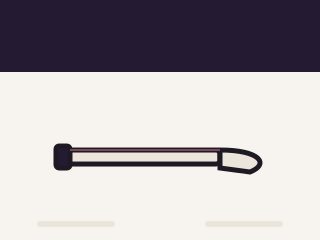
good chef's knife
One knife serves one cook, so this is for the half who cooks. Check the steel type, whether it is forged, and the stated hardness.

a large end-grain board
End-grain is harder on knives and softer on the board; check the wood type and thickness. Confirm it is pre-oiled and comes with maintenance instructions.
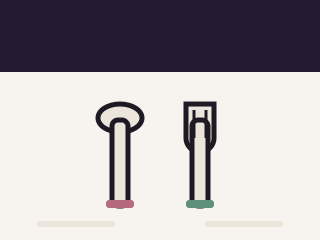
a stainless serving spoon and fork set
Check the piece count and whether the set serves or carves. Confirm the steel grade and whether the handles are hollow or solid.
How to choose kitchen gifts for couples: the weekly-use rule
Buy the upgrade to something they touch every week. Skip the appliance they'll wheel out once a month and then store.
A cast-iron skillet is the textbook weekly upgrade. Check the stated diameter and whether it comes pre-seasoned. Weight matters here; a 12-inch skillet is heavy enough that one half will reach for it more than the other. If both of them cook, two skillets in different sizes serve the household better than one large one.
Knives are different. One 8-inch chef's knife serves one cook, not two. Check the steel type, whether it is forged or stamped, and the stated hardness. A forged knife holds an edge longer than a stamped one. This is a gift for the half who cooks — say so on the tag.
Boards split by purpose. A serving board under 16 inches is a cheese board, not a serving board. Check the stated length. End-grain boards are harder on knives and softer on the board; edge-grain is cheaper and easier to maintain. For a personalized board, check the turnaround against the date you need it. Two names and a date are three things to misspell.
A ceramic serving bowl needs a stated diameter and capacity. "Large" is vague. Confirm it is dishwasher- and microwave-safe if they will use it daily.
A portable blender is the one appliance that clears the weekly bar. Check whether it crushes ice or only blends soft fruit, which the listing usually states. Battery capacity decides whether it survives a weekend away.
What to check on a listing: capacity, warranty, and who it serves
Three checks before you buy.
First, stated dimensions. A "large" ceramic bowl means nothing without a diameter and a capacity in ounces. A serving board needs a stated length; under 16 inches is a cheese board. A 12-inch cast-iron skillet weighs more than an 8-inch one, so check whether the weight suits both halves or only the one who lifts it.
Second, materials. Check the steel grade on a knife or a stainless serving set, the wood type on a board, and whether a portable blender's blades handle ice or only soft fruit. If the listing does not state these, that is a warning sign.
Third, care requirements. Cast iron needs seasoning. Some skillets come pre-seasoned; some do not. Wooden boards need oiling. Check whether the board comes pre-oiled and with a maintenance kit. If the gift requires a maintenance habit the couple will not keep, skip it.
The table below compares the major kitchen gift categories on use frequency, who the item serves, and warranty. Use frequency and the "serves" column are our editorial judgment; warranty varies by listing.
| Category | Use frequency (our judgment) | Serves (our judgment) | Warranty |
|---|---|---|---|
| Cookware (skillets, pots) | Weekly to daily | Both | Varies by listing |
| Knives | Daily | One cook | Check listing |
| Coffee | Daily | Both or one | Varies by listing |
| Serveware (boards, bowls) | Weekly | Both | Rarely warranted |
| Barware | Occasional | Both | Rarely warranted |
| Appliances (blenders) | Weekly to monthly | Both | Check listing |
| Tools (serving sets) | Weekly | Both | Varies by listing |
| Bakeware | Monthly to weekly | One or both | Rarely warranted |
Our take: Buy the skillet or the board before the appliance. The weekly-use categories — cookware, knives, serveware — are where a kitchen gift earns its place in the home. The monthly-use categories are where it gathers dust. When the couple already owns the weekly tool, buy the upgrade version of it, not a second appliance.
Kitchen gifts for couples: when to skip
Skip when they already registered for cookware, when their kitchen has no storage left, or when the gift demands a maintenance habit they will not keep.
A registry is a duplicate-prevention list. If the couple registered for a skillet or a knife set, that item is spoken for. Check before buying off-registry. For more on what to buy when the registry is picked clean, see Registry Picked Clean? What to Buy Off-Registry.
Counter space is finite. A cast-iron skillet lives on the stove or in the cabinet. A serving board lives on the counter or in the rack. If their kitchen has no storage left, buy the consumable — the coffee, the oil, the salt — not the hardware.
A maintenance habit is a hidden cost. Cast iron needs seasoning. Wooden boards need oiling. If the couple will not keep the habit, the gift becomes a chore. Buy pre-seasoned, buy pre-oiled, or skip it.
Our suggested skip checklist before you buy:
- Is the item already on their registry?
- Where will it live when it is not in use?
- Does it need seasoning, oiling, or another recurring habit?
- Will both of them use it, or only the half who cooks?
- Is it an upgrade to something they own, or a duplicate?
For the broader test of whether a gift serves the household rather than one half of it, see Useful Gifts for Couples: The Household-Gift Test.
FAQ
What are the best kitchen gifts for couples who already have a fully stocked kitchen?
Buy the consumable, not the hardware. A good olive oil, a flaky salt, or a coffee subscription replaces nothing they own and takes up zero counter space. If you want to buy an object, buy the upgrade to the tool they reach for most — the next board up, the sharper knife — not a duplicate. If you cannot see their registry, ask one half of the couple or a close family member what they cook with daily.
How much should I spend on a kitchen gift for a couple?
Price bands below are ours, not a sourced figure. A serving board runs $40 to $120. A cast-iron skillet runs $40 to $150. A forged chef's knife runs $60 to $200. Above $200, you are in appliance territory, the category most likely to sit unused.
What kitchen gifts are best for couples who enjoy baking versus cooking?
Baking rewards precision gear: a baking stone, a digital scale, a ceramic pie dish. Cooking rewards versatile gear: a skillet, a knife, a board. If one half bakes and the other cooks, buy the shared item. Buy the serving board or the ceramic bowl, not the specialist tool only one of them will touch.
Mara Ellison writes buying guides, not reviews; nothing here was tested by us.
Sources
- U.S. Federal Trade Commission — "Guides Concerning the Use of Endorsements and Testimonials in Advertising" (16 CFR Part 255) (https://www.ftc.gov/legal-library/browse/federal-register-notices/guides-concerning-use-endorsements-testimonials-advertising) Retrieved 2026-09-02.